
Audience-Aware Funnel Design
And why "Creative = Targeting" is a gross simplification

100% of marketers have heard “Creative = Targeting.”
90% claim they understand it.
Less than 30% actually do. At least to its full extent. Actually building workflows around this principle that allow them to scale an account and business.
When I presented my full-funnel creative strategy framework at Appsforum Lisbon early March, Eliza Dumitrache (Lead UA @ GetYourGuide) reframed it as “Placement-aware funnel design.” I’m stealing and altering the term. Thanks Elize.
Because placement-aware doesn’t go far enough. It’s audience-aware.
What Creative = Targeting actually means
Creative is a vague term. It doesn’t tell us much about how we influence targeting in one direction or another.
From my perspective there are 4 variables worth internalizing:
Message: copywriting is your biggest creative lever and easiest way to alter audience targeting. Talk about old people problems and old people will respond.
Media: video vs static plays a significant role in where your ads get delivered. 9:16 video is native to Reels and will largely see delivery there. Statics belong in feeds.
Content Type: your ads are content. They get delivered where that content is usually consumed. Memes are home to Facebook feed. Infographics rather scale on Instagram feed. Talking Head UGC on Instagram Reels. Lofi textwall concepts with no voiceover see strong delivery on FB Reels. Combine native media with a native content type and you learn how to scale a placement.
Funnel: whether you’re sending traffic into a web funnel or using app promo additionally impacts audience composition. Web campaigns tend to deliver to a broader placement mix and older audiences. What performs on web vs app can be significantly different.
So “Creative = Targeting” is a gross simplification. A more useful equation:
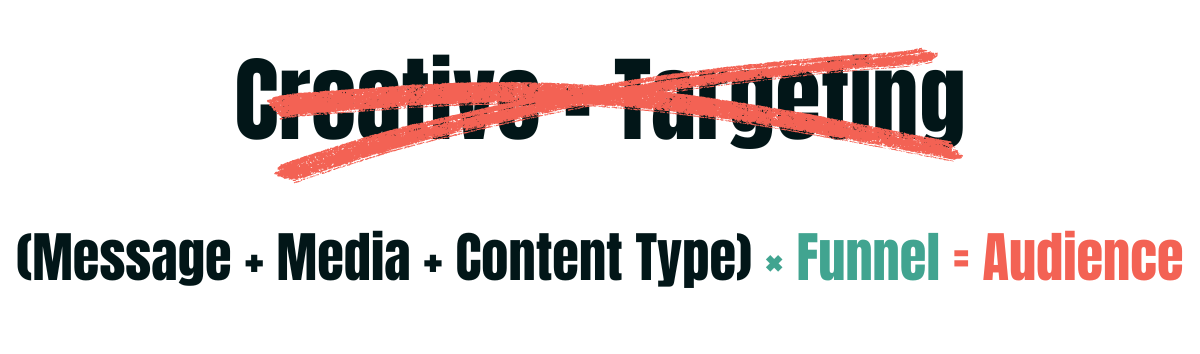
I use audience instead of targeting for two reasons. First, it removes ambiguity around your ad set targeting settings (which should be broad in 95% of cases). Second, it makes clear that each of your ads will find its own audience. Your creative strategy is inherently dynamic.
What this means for your funnel
Most advertisers I know treat creative as separate from what happens after the ad click. Like the user views the ad, clicks, and thinks “okay, job done, doesn’t matter what happens next, you got me.”
It does matter. A lot.
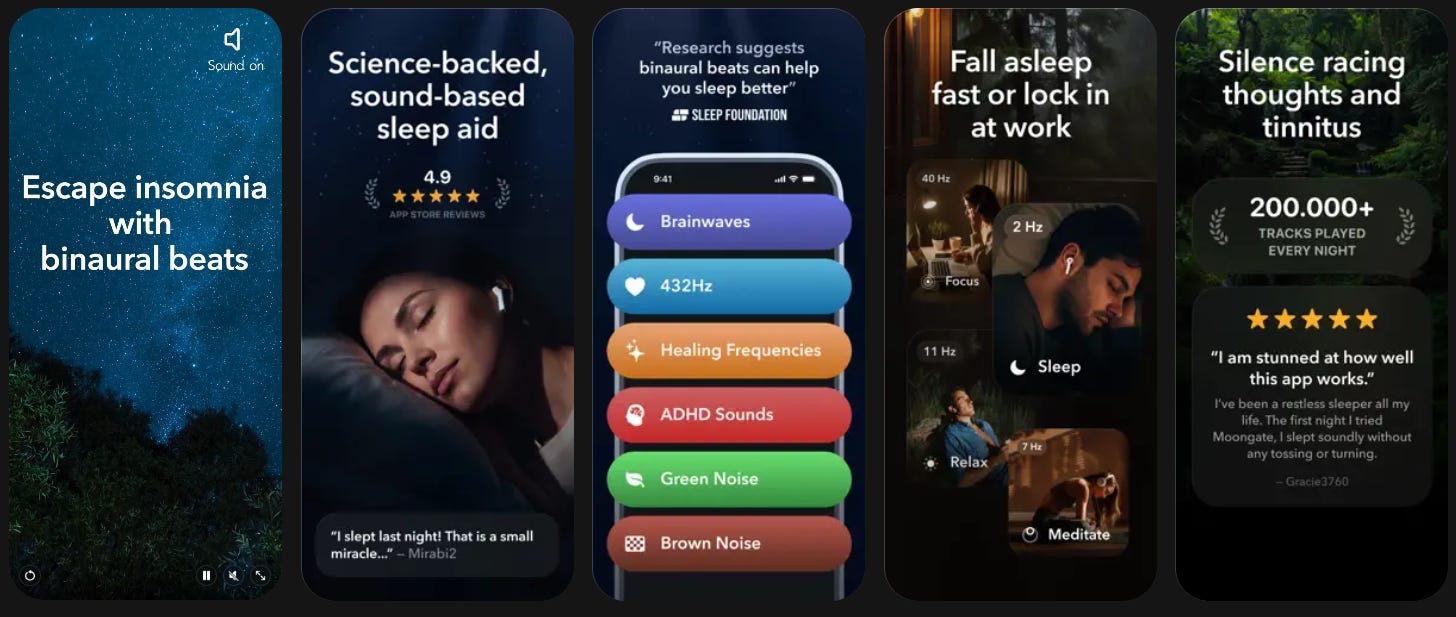
Store Screenshots
If you’ve done a good job your current App Store angle tailors to a specific audience. It states who this is for, what outcome they can expect, why they can trust you.
There’s likely a number of ad messaging angles that work well with this store presence. Anything that addresses the main and secondary pain points of the audience you’ve positioned for.
Yet scaling an ad account means going after new audiences through ongoing creative experiments across message, media and content type. The further those experiments move from the core audience on your App Store presence, the more likely they are to fail. Adjacent audiences land on your store page and don’t feel like it’s for them.
A chicken-egg problem. One that can be largely addressed through data analysis and Custom Product Pages. When ads show strong upper funnel metrics (Outbound CTR, CPC, solid audience composition), a strong social score (saves, shares, comments) plus a strong trial start rate (yet broken install rate) you’ve found an audience worth addressing through a CPP or incorporating into your default set.
I’d opt for the default as long as you can. It captures both click and viewthrough traffic.
First Time User Experience
Same principles. Creatives will struggle to perform against a cost per trial target if the 30 screens before your paywall don’t speak to the audience that ad is bringing in.
You want to address their objections and fears. Show social proof relevant to that audience. Build for their needs. Press mentions make you seem credible to mostly older users consuming that media. Younger audiences are more likely convinced by an influencer shoutout.
Web funnels allow you to frontload that experience and put it into the hands of marketing. Where it belongs and where it will actually get tested. 3rd party funnel builders aren’t popular because they let you build funnels. They’re popular because they minimize the technical barrier for team members that actually understand audience composition and treat funnel testing like creative testing. Which you will mostly find in marketing, not product or engineering.
Scaling broadly means addressing an ever-increasing amount of sub-audiences in your funnel and diversy across multiple as you grow. Cracking a new audience top of funnel potentially means building a specific funnel for them in the first place so they get a chance to convert.
This becomes even more obvious when you map it against pricing.
Placement-Price Reciprocity
There are 3 common beliefs in app growth that make for an explosive mismatch once you look at them together:
Talking Head UGC is the best social creative format because it’s “native”
Users need to convert at $50+/year to make up for high social CPMs
Free trials are mandatory to lower commitment on high-priced plans
Here’s what actually happens.
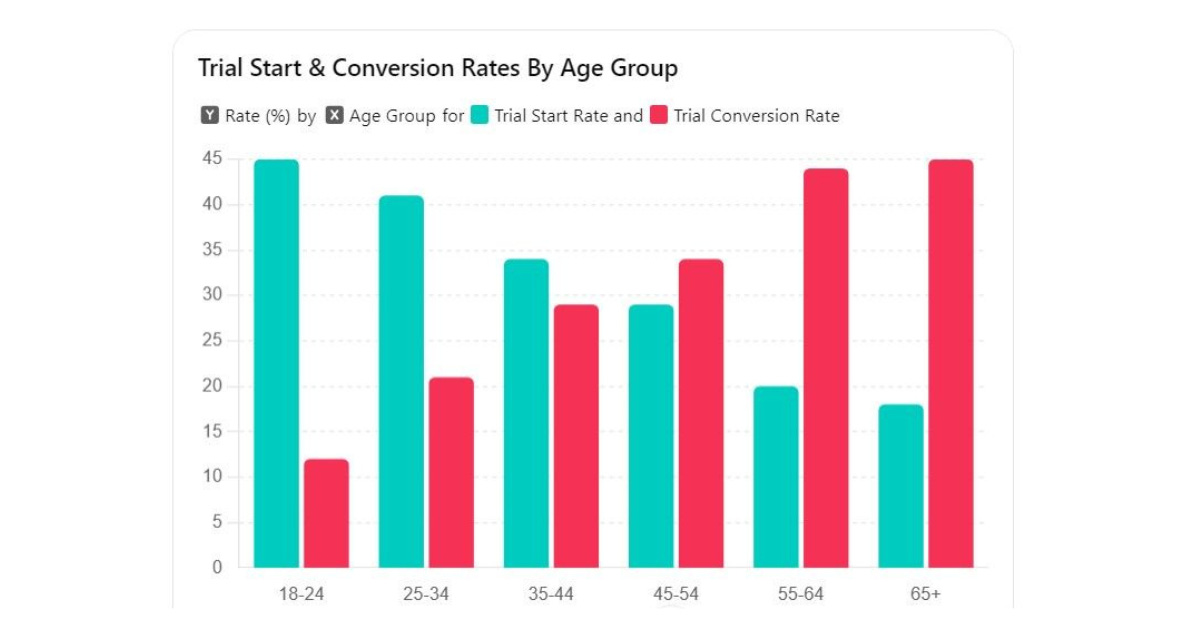
Talking Head UGC delivers mostly on IG Reels, where it’s the most fitting native content. That placement skews young. It’s Meta’s TikTok competitor. You’re reaching a young, low-intent audience.
Maybe you’ve prepared your screenshots and onboarding for that crowd. Made it flashy, entertaining, dopamine-friendly. Yet those users don’t have the money to pay another $50 sub while they already need Spotify and Netflix. Your pricing doesn’t match your creative. Or the other way around. Back to chicken-egg.
Yet they’ll happily install and take a trial. It’s free after all.
Expect poor trial-to-paid rates and an algorithm that further amplifies the mismatch because it has no visibility on that downfunnel metric.
Setting your creative strategy up for success
You can’t solve a chicken-egg problem. But you can set your creative strategy up to avoid the worst of it:
No mindless volume operation. Testing more gives you higher chances of success but only if you do it with a plan. Your strategists should know at any time which audiences are addressed within your current core funnels.
No silos. Unlocking adjacent or new audiences should start with research, bringing core messaging findings into your funnel or spinning up a new one (e.g. a web funnel). 3 teams working across creative, ASO and onboarding that rarely talk is a recipe for failure.
Experimentation synergies. Go deep on the audiences driven through your core creative pillars. Emerging ad messaging should inform funnel copy. Screenshot experiments can inform creative. Data generated in your funnel is gold to further understand audience needs.
Pricing enables broad targeting. Whether it’s dynamic pricing, pricing sequences or multi-funnel pricing - you need a way to show a variety of offers and price points to cover more ground under the price curve. Price shouldn’t determine whom you can target. If an audience has the need for your product you have the potential to acquire them at sustainable ROAS if you price accordingly. Young, old, low intent, high intent.